The Hudson Palisades is one of my favorite places to photograph in the fall. The dark grey cliffs against a full range of autumn color make for a contrast I never get tired of.
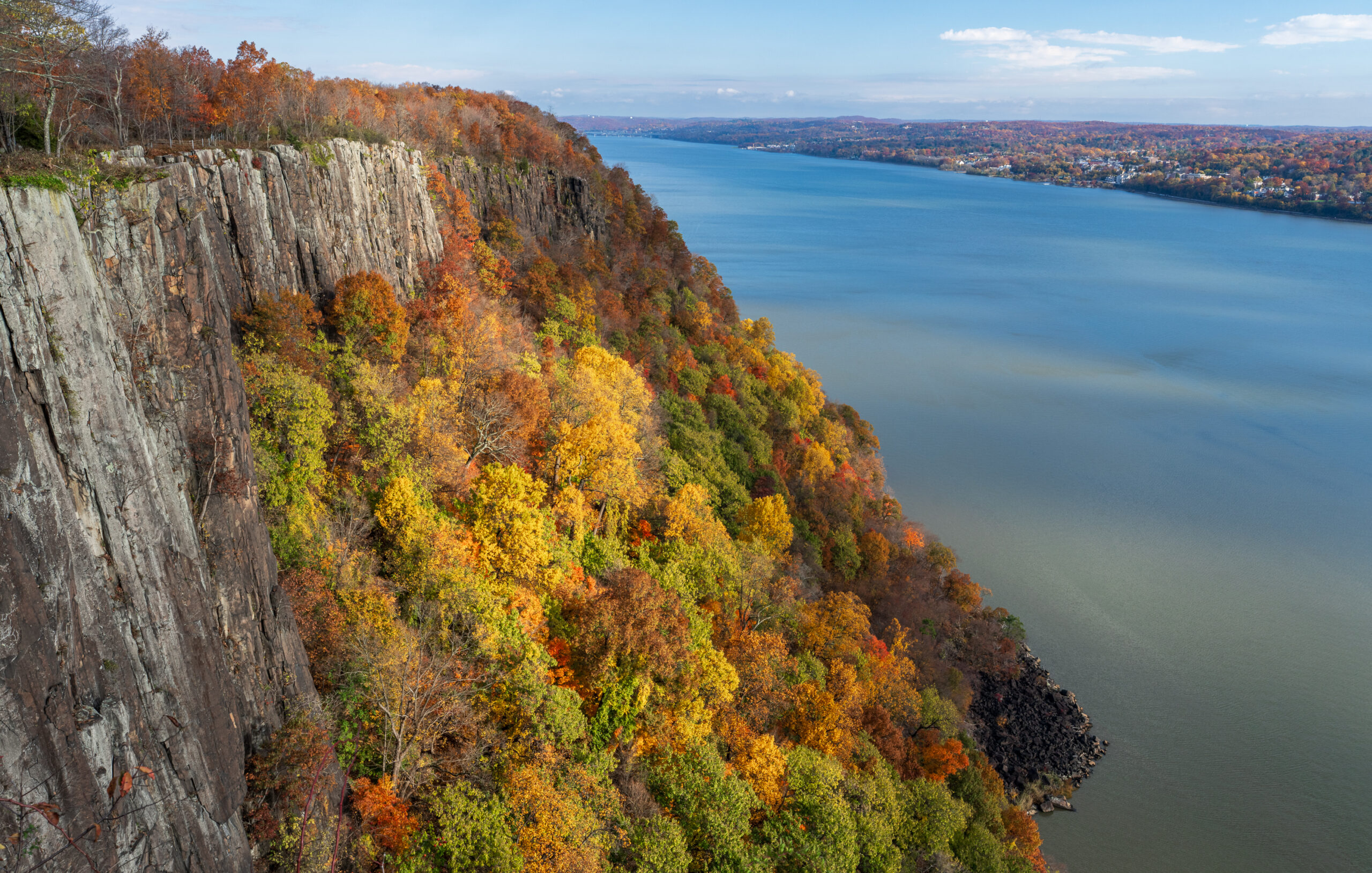

Those cliffs are older than they look. Nearly 200 million years ago, molten rock pushed into the earth and slowly cooled underground into a hard igneous rock called diabase. As it cooled, it contracted and cracked into the vertical columns you can still see in the cliff face. Over millions of years, erosion and glaciers stripped away the softer rock around it, leaving the wall we see today. Even the forest below has a story: it grows on talus, the piles of broken rock that have fallen from the cliffs over thousands of years.
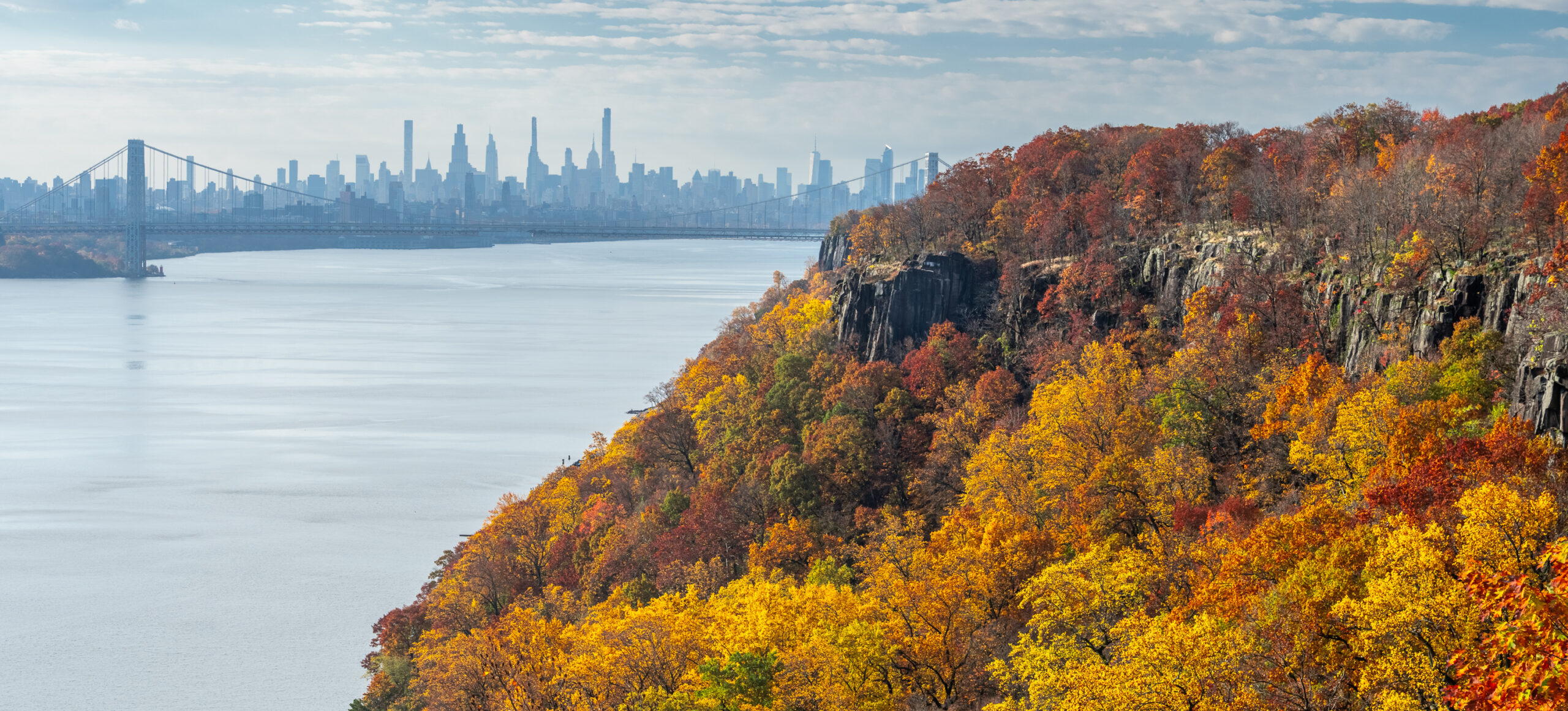

This is one of my favorites from the day. I like the duality in the composition: nature and the cliffs on the right, the bridge and the Manhattan skyline on the left, almost running into each other.
The Birds I Didn’t Plan On
I also went looking for the resident Peregrine Falcons. They weren’t being very cooperative while I was there. But while I was scanning the cliffs I noticed a bird standing on a rock in the distance. If I could get to the right spot, it would put the fall color on the New York side of the river behind it. So I headed that way, and found a Black Vulture.
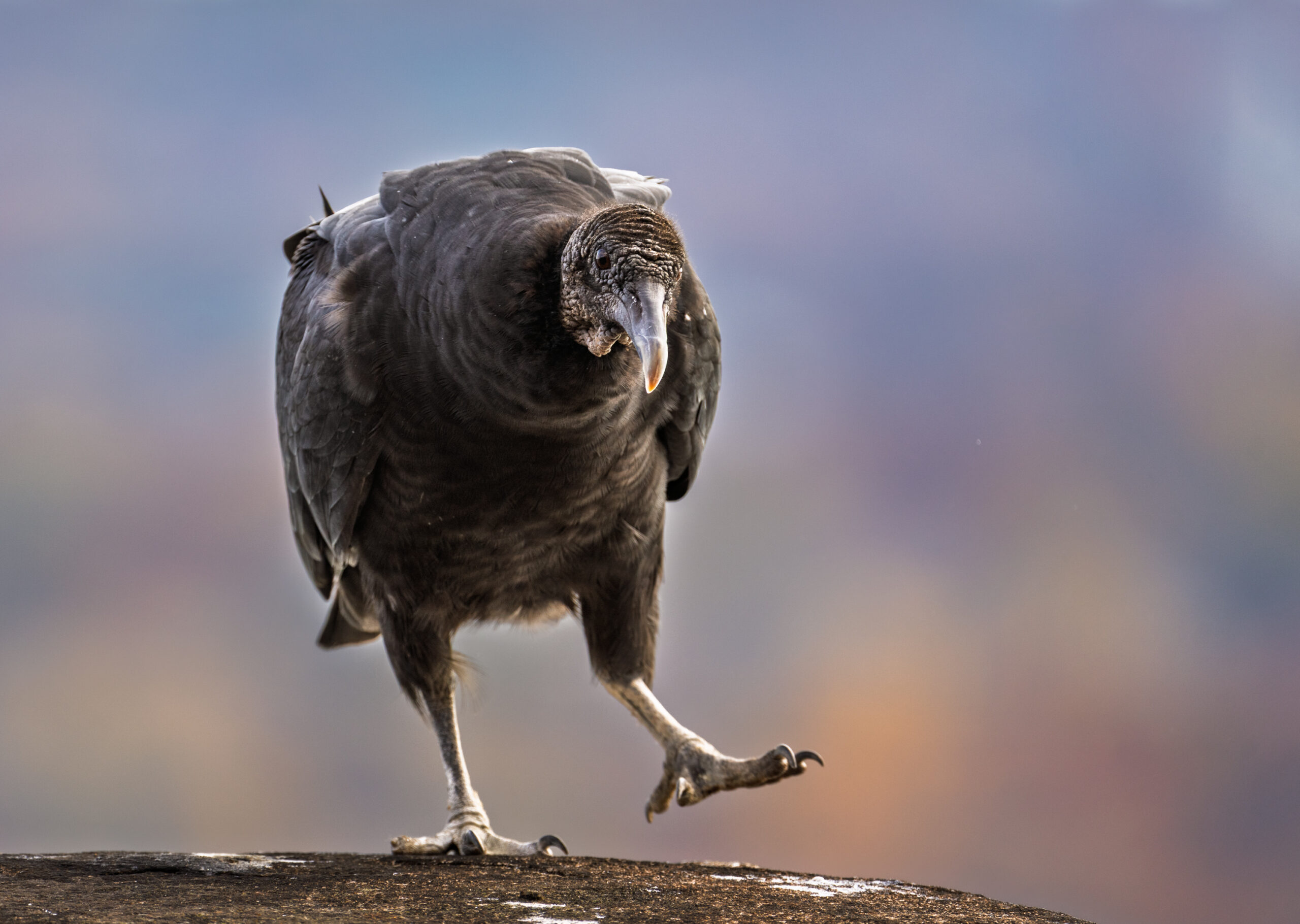

I spent a while photographing it. Vultures don’t get much love, but as nature’s cleanup crew, they’re an important part of the ecosystem.
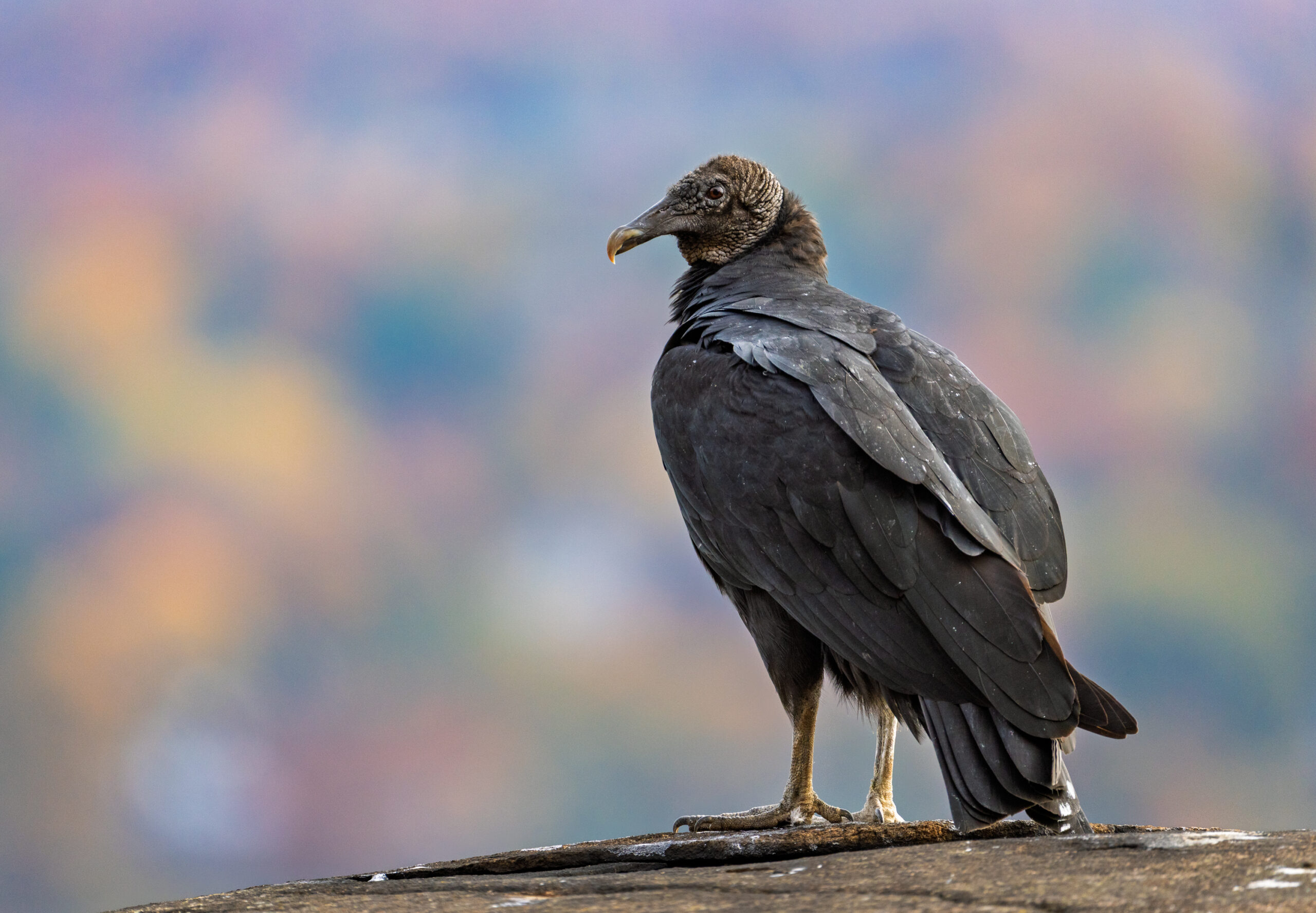

At one point it spread its wings and held them open.
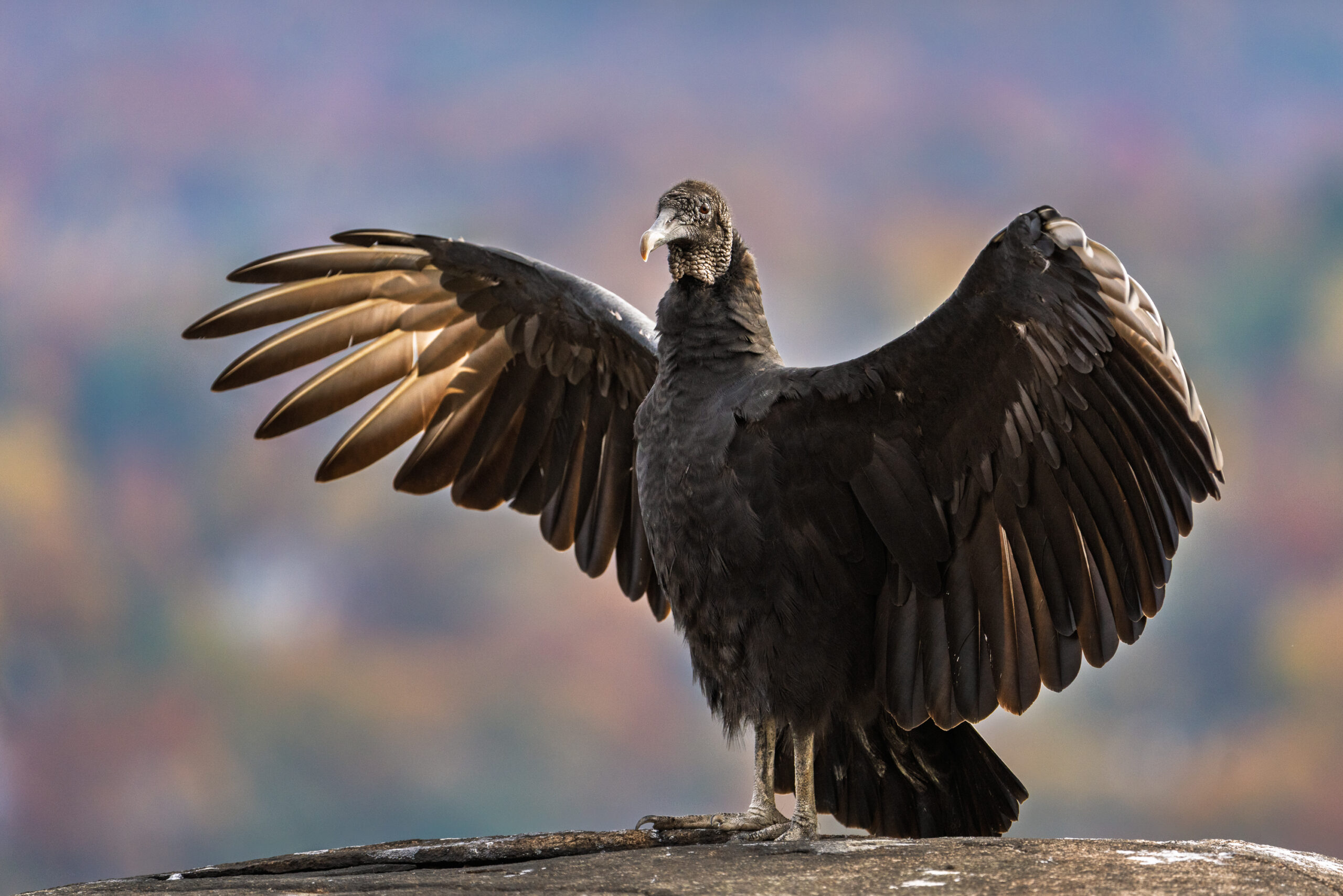

This behavior is called sunning. It helps the bird regulate its body temperature and dry its feathers. Black Vultures also differ from their more common cousins in how they find food. Turkey Vultures locate carrion by smell; Black Vultures rely mainly on eyesight.
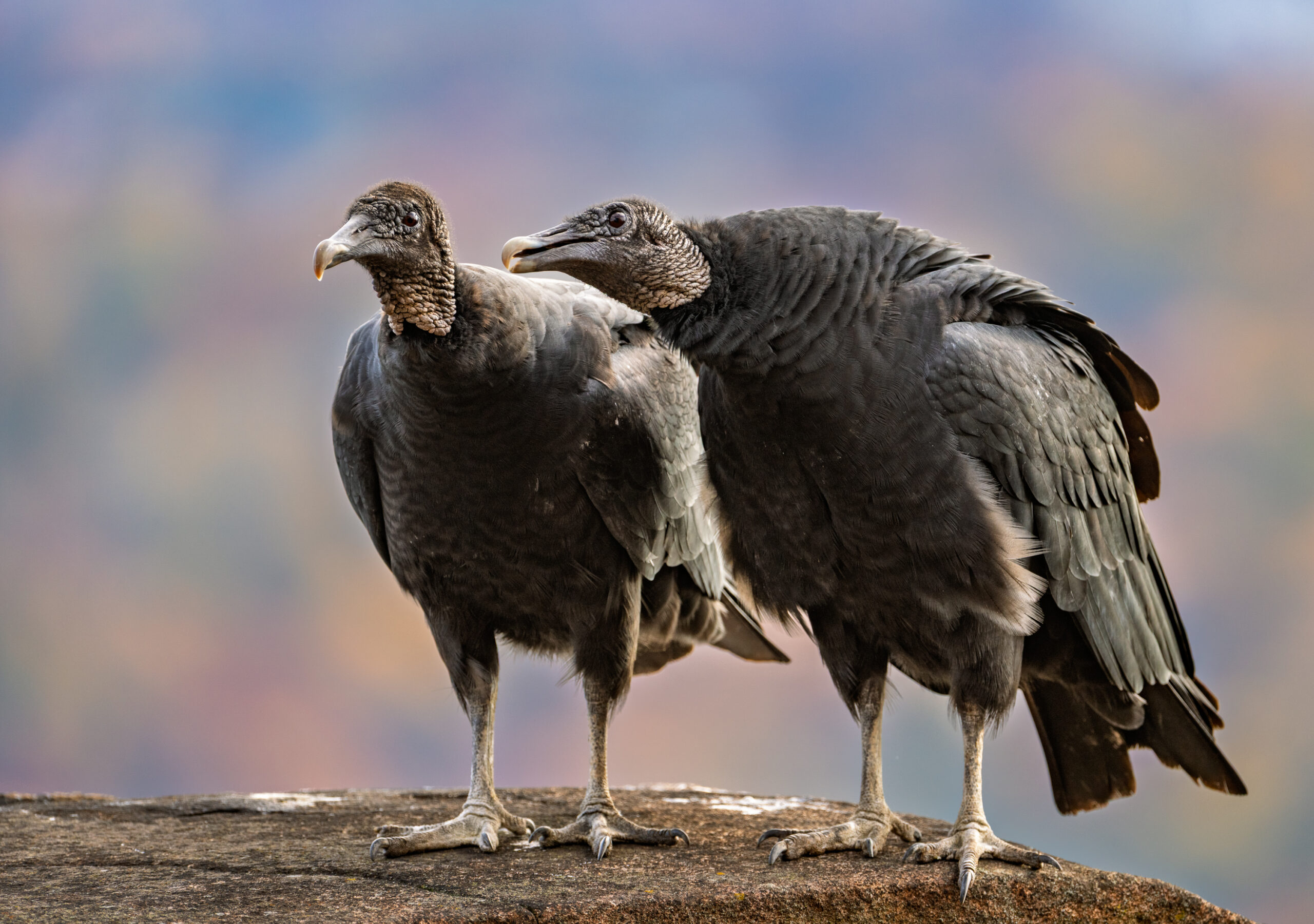
Then a second vulture walked over to join it.

I went for falcons and came home with vultures. That’s how it goes with wildlife, and some days the unexpected turns out better.